filtri
Aucun filtre sélectionné
La gamme complète de 1 modèles de Fraises à neige Eurosystems , avec tarifs à partir de € 1,876.38 , En Stock et Livraison Gratuite. Achetez directement sur AgriEuro, sans intermédiaires et sans mauvaises surprises : à la différence des Marketplace qui ont recours à des revendeurs tiers (sans services ni garanties), nous offrons un Service Direct et Complet, en partant de conseils Avant-ventes jusqu’à l’assistance SAV. L’expédition s’effectue par notre Dépôt AgriEuro. Et nous sommes les uniques vendeurs en ligne à vous offrir un service de SAV sur des produits Fraises à neige Eurosystems , ainsi que la fourniture des Pièces de Rechange (Vous pourrez retrouver le tableau du schéma éclaté sur votre compte client).


Eurosystems was founded in 1973 in Luzzara, in the province of Reggio Emilia, an area closely associated with farming and soil care. Over the years, the company has expanded its range with machines for gardening, horticulture, haymaking and outdoor maintenance. Production has remained in Italy, with departments dedicated to research, development, prototyping, painting and robotic welding. Since the 1980s, the brand has also manufactured dedicated products for international partners, strengthening its presence beyond the domestic market.
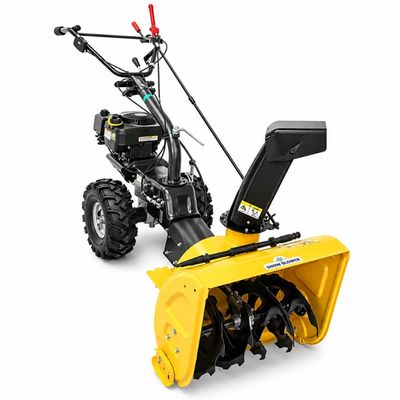
Eurosystems snow blowers reflect the brand’s approach: robust mechanics, accessible controls and configurations designed for practical seasonal work. They are suitable for clearing paths, courtyards, driveways and yards by directing the snow towards a chosen location through the discharge chute. This page also features Eurosystems multifunction snow blowers, based on a power unit that can be fitted with different attachments purchased separately. This configuration allows the same power unit to be used for several jobs throughout the year and reduces the storage space required for complete machines.
At AgriEuro, Eurosystems snow blowers can be selected according to their technical features, helping identify the configuration best suited to the surface, snow depth and frequency of operation. The type of ground, available manoeuvring space and suitable discharge direction should also be considered before choosing.
These configurations fall within the semi-professional category and are intended for demanding private users, maintenance workers and operators who need to clear medium to large surfaces after recurring snowfall. The available gears allow the travel speed to be reduced on compacted snow and increased on sections that have already been partially cleared. Reverse gears make it easier to reposition the machine at the end of each pass.
The multi-tool structure allows a single power unit to be used with attachments designed for different jobs. During winter, the snow blower collects the snow and discharges it to the side, leaving the route clear for subsequent passes. In other seasons, the power unit can accommodate compatible attachments specified by the manufacturer and purchased separately.
Eurosystems multifunction snow blowers combine a self-propelled power unit with a replaceable front snow blower attachment. The two-stage system uses ice-breaking augers to collect the snow and a second component to direct it into the chute. The 52 cm working width keeps the machine suitable for paths and entrances where a wider structure would restrict manoeuvring. The adjustable chute allows the discharge side to be selected according to the wind, obstacles and routes that must remain clear. The gears allow the travel speed to be adapted to the consistency of the snow; a lower speed is preferable with heavy or compacted material. This configuration makes it possible to replace the front attachment and use the power unit with other compatible equipment. Before purchasing, it is important to check which components are included and which must be ordered separately.
Purchasing a Eurosystems snow blower from AgriEuro provides access to dedicated services both before and after delivery. Support continues over time through orderable spare parts and specialised assistance for any requirements arising after purchase.
Purchase the Eurosystems snow blower best suited to your needs now and prepare for winter work with AgriEuro services.
The choice depends on the surface to be cleared, type of ground, quantity of snow and frequency of operation. Manoeuvrability is important on smaller paths and courtyards; working width, traction and the number of gears become more significant on larger yards. With wet or compacted snow, reducing the travel speed helps the snow blower receive a more controlled quantity of material. The available space for adjusting the chute and depositing the snow without blocking entrances or routes must also be considered. For a multifunction configuration, the compatibility between the power unit and snow blower must be checked, carefully distinguishing between included equipment and attachments sold separately.
In a two-stage snow blower, collection and discharge are performed by two separate components. The front auger or blades collect the snow and convey it towards an impeller, which pushes it through the discharge chute. In a single-stage system, one component performs both functions. The two-stage solution is suitable for more substantial accumulations and work requiring the snow to be discharged away from the route. Actual performance still depends on moisture, compaction, snow depth and travel speed. A two-stage snow blower must therefore also be operated at a pace suited to the conditions.
The adjustable chute determines the direction in which the snow is discharged. Before starting, it is advisable to plan the route, identify the clear side and consider the wind direction. The deflector changes the angle of the discharge and helps define where the snow will be deposited. Correct adjustment prevents snow from falling back onto cleared sections and reduces the risk of directing it towards people, vehicles, windows or other obstacles. Any adjustment must be made using the controls provided by the manufacturer. If the chute becomes blocked, the engine must be switched off and all moving components must stop before the dedicated clearing tool is used.
A snow blower can remove wet snow, but the work requires a slower travel speed and narrower passes. Snow containing a large amount of water is heavier, sticks to internal surfaces and can reduce the discharge distance or block the chute. It is preferable to work before the accumulation is compacted by people or vehicles. If the discharge flow decreases, the amount collected during each pass must be reduced and the chute checked according to the manual. Hands and feet must never be placed inside the auger or chute. To clear a blockage, switch off the engine, wait for all components to stop and use only the specified tool.
A multifunction snow blower is suitable when the same power unit is intended for use during several seasons. The snow blower is fitted for winter clearing; other compatible attachments can be used for soil care, grass cutting or surface cleaning. This design reduces the number of engines requiring storage and periodic checks. Precise compatibility checks are still necessary because not every attachment can be fitted to every model. Before ordering, check the power unit, coupling system, included equipment and separately sold attachments. The space needed to store the attachments and the time required to replace them should also be considered.
The speed should be adjusted according to the depth, weight and compaction of the snow. Fresh, shallow snow can be cleared at a faster pace, provided that discharge remains continuous. With heavy, wet or hardened accumulations, select a low gear and reduce the width of each pass. If the discharge distance decreases, the engine speed drops or the chute starts to fill, the machine is receiving more material than it can discharge. In this situation, slow down and continue working with narrower passes. Reverse gears are intended for repositioning and do not replace a route planned before starting the work.
Before starting, check the engine oil, fasteners, controls, safety devices and conditions of the working surface. Petrol models must be refuelled outdoors with the engine switched off and cold. Stones, branches, cables and objects that could be collected and thrown by the snow blower must be removed from the surface. It is also useful to check the initial chute direction, ensure that routes are clear and confirm that no people or animals are nearby. Non-slip footwear and the protective equipment specified in the manual complete the preparation. All controls must be understood before starting, including the procedure for quickly stopping the engine and rotating components.
A blocked chute must be cleared only with the engine switched off and all moving components completely stationary. Disengage the snow blower and traction, switch off the machine and remove the key where fitted, or follow the procedure specified in the manual. Use the chute clearing tool supplied by the manufacturer, keeping hands and feet away from the auger, impeller and discharge opening. After clearing, check that no foreign objects remain and that the chute can rotate freely. Repeated blockages may indicate an excessive travel speed, very wet snow or passes that are too wide.
Maintenance includes checking the oil, cleaning, inspecting fasteners and examining the transmission components at the intervals stated in the manual. After each operation, snow and residues should be removed from the snow blower and chute, after first waiting for the moving components to stop completely and the engine to cool. The spark plug, air filter, cables, belts and moving components should be checked periodically, with replacements performed only when specified. Unusual noises, vibrations or loss of traction require inspection before work continues. More complex procedures should be entrusted to the service department. Spare parts and lubricants must comply with the specifications for the purchased model.
For storage, the snow blower must be clean, dry and subjected to end-of-season checks. Fuel and oil must be treated according to the manufacturer’s instructions, without adopting general procedures that are not specified for the installed engine. Belts, cables, fasteners, scrapers, skids and wear components should be inspected, allowing any required work to be completed before the next snowfall. Store the machine in a dry, ventilated place away from flames, sparks and heat sources. Removed attachments must be placed in a stable, protected position. A breathable cover helps keep dust away without trapping moisture on metal components.
Si vous souhaitez changer de langue veuillez cliquer sur l'une des icones suivantes: